‘Don’t turn Ladakh into another Goa or Delhi’: liberalised liquor policy sparks uproar
Religious bodies, political leaders and civil society groups are demanding an immediate review of the decision that was announced on Sunday.
In a major step towards addressing Ladakh’s growing water crisis, Lieutenant Governor Vinai Kumar Saxena inaugurated India’s first-ever Rock Check Dam on the Indus River at Upshi in Leh district.




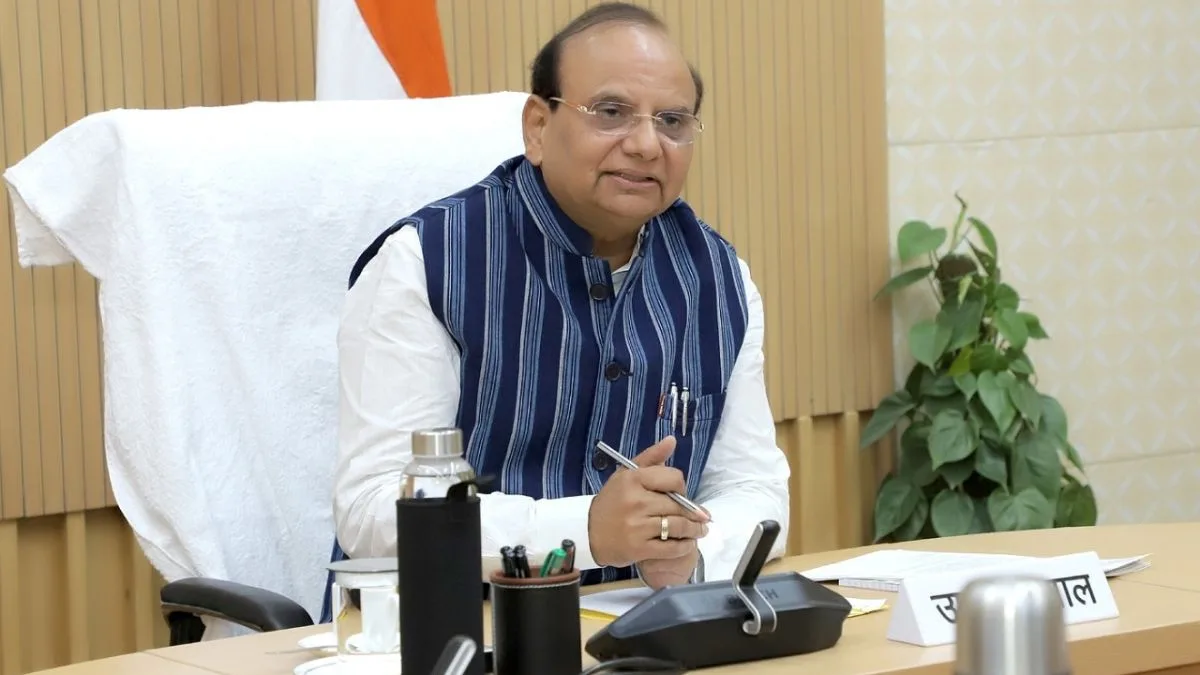
File Photo: IANS
In a major step towards addressing Ladakh’s growing water crisis, Lieutenant Governor Vinai Kumar Saxena inaugurated India’s first-ever Rock Check Dam on the Indus River at Upshi in Leh district. The eco-friendly initiative, named the “Sindhu Jal Samriddhi Abhiyan”, has been designed as a sustainable solution to improve irrigation and strengthen water security in the high-altitude cold desert region.
The Rock Check Dam, located 44 km from Leh at an altitude of 11,400 feet, has been conceptualised by LG Saxena as an eco-friendly, cost-effective, and sustainable remedy to Ladakh’s recurring water shortages.
Advertisement
The structure is nearly 200 feet long, with a base width of 30 feet on the riverbed for enhanced stability. Its top deck is 15 feet wide and stands 5 feet above the riverbed. The dam has been specifically designed to withstand high water pressure.
Advertisement
Currently, the flow of water in the Indus River is around 25 cusecs (cubic feet per second), which is expected to rise nearly eightfold to 200 cusecs during July and August. The design of the rock weir ensures that it remains stable and does not get washed away even when the water volume increases substantially.
The check dam has been constructed using large rocks sourced from the riverbed and nearby areas to help retain water in the river. The site for the project was identified in consultation with local residents. The Lieutenant Governor has also directed the Irrigation and Flood Control Department to construct three more such check dams within a month on an experimental basis.
In many parts of Ladakh, the Indus River becomes too shallow, making it difficult for standard motors and pumps to lift water to uphill agricultural fields. These rock check dams are expected to play a crucial role by creating large pondage areas capable of storing sufficient water during the peak sowing season.
LG Saxena said the Sindhu Jal Samriddhi Abhiyan would improve irrigation facilities, strengthen water security, and support sustainable agriculture in remote villages.
“It is another innovative and eco-friendly project aimed at achieving long-term water security in Ladakh after the successful launch of Project Him Sarovar,” he said.
Unlike conventional cement-concrete check dams, a rock check dam is a semi-permanent barrier built across a river channel. It slows the velocity of flowing water, creates a large pondage area upstream, and allows excess water to flow through, thereby creating a cascading effect and increasing oxidation in the river.
Remarkably, the construction of the check dam was completed in just seven days. It has successfully created a vast pondage area stretching nearly 1,500 feet (500 metres) upstream and storing close to 40 million litres of water. The water depth along the river edges is around 4 to 5 feet, while the depth in the middle reaches up to 10 feet.
Advertisement